
Viktor Frankl’s Meaning Therapy
How to find meaning in everything, even suffering.

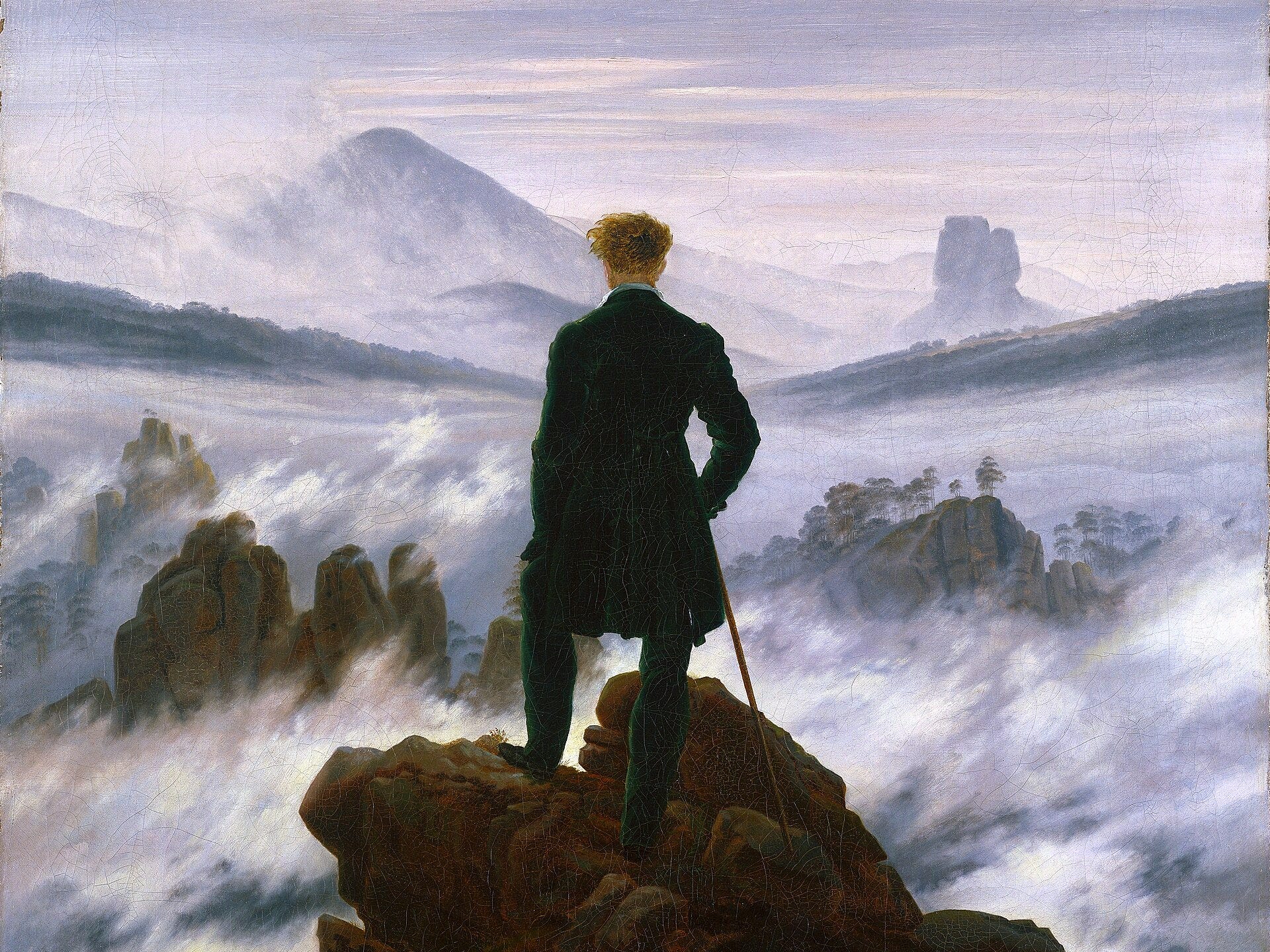
When I was seventeen, I was stuck on the problem of suffering. It was a theological stumbling block. God was real, I was experiencing him and I had experienced him answering my prayers. So how did I square suffering with this? Classic problem of evil stuff.
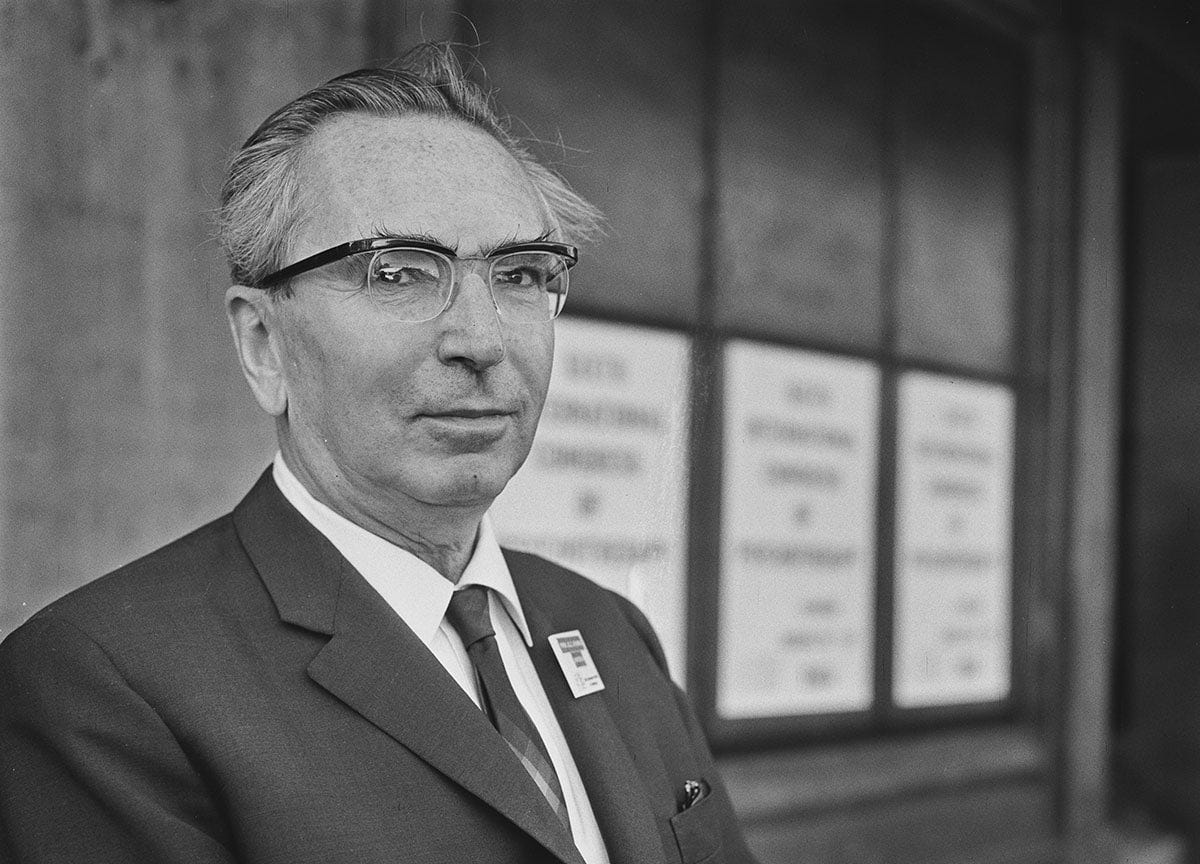
My instinct to go and pick up books about topics that bothered me kicked in and I picked up C.S. Lewis’ ‘The Problem of Pain’ and Viktor Frankl’s, ‘Man’s Search for Meaning’. I was most drawn to Frankl because he had suffered the Nazi concentration camps as an Austrian Jew and had written his observations down. He was also a neurologist and a psychiatrist. Here was someone I was willing to listen to.
I remember pulling that book out of my denim jacket pocket on train rides and having to put it down every three pages or so. I found the details of the world he described harrowing and had to often turn away to look out at the passing fields.
Over a decade later, I was surprised to encounter him again on my therapy training course. I hadn’t known that beyond the best selling, ‘Man’s Search for Meaning’, Frankl had created his own complete form of psychotherapy which he called ‘Logotherapy’. My tutor pointed us to his main book explaining Logotherapy, ‘The Will to Meaning’. I picked it up that day and devoured it in two weeks.
And so, if you too had maybe heard about Frankl but hadn’t ever heard of Logotherapy, you’re in the right place. Here are my favourite insights from what he sets out in, ‘The Will to Meaning’.
The Existential Vacuum
In the introduction, Frankl talks about what is showing up in his psychiatry work back in the fifties/sixties - what he calls ‘The Existential Vacuum’.
‘Ever more patients complain of a feeling of emptiness and meaninglessness, which seems to me to derive from two facts. Unlike an animal, man is not told by instincts what he must do. And unlike man in former times, he is no longer told by traditions what he should do. Often he does not even know what he basically wishes to do.’ p. x
Straight out of the gate, I felt as though Frankl could just as easily be talking about 2026. I soon thought that perhaps the same kind of person who has been stumbling onto Jordan Peterson’s meaning work on YouTube in recent years, Frankl was encountering as his patients decades earlier.
‘ … despite the crumbling of traditions, life holds a meaning for each and every individual, and even more, it retains this meaning literally to his last breath. And the psychiatrist can show his patient that life never ceases to have a meaning. To be sure, he cannot show his patient what the meaning is, but he may well show him that there is a meaning, and that life retains it: that it remains meaningful, under any conditions.’ p. x
Those last lines connect his theory to his life. Frankl found a way to endure the horrors of the holocaust without losing his sense that his life was meaningful. He became convinced that life remains meaningful under any conditions and that we could discover meaning in our sufferings too.
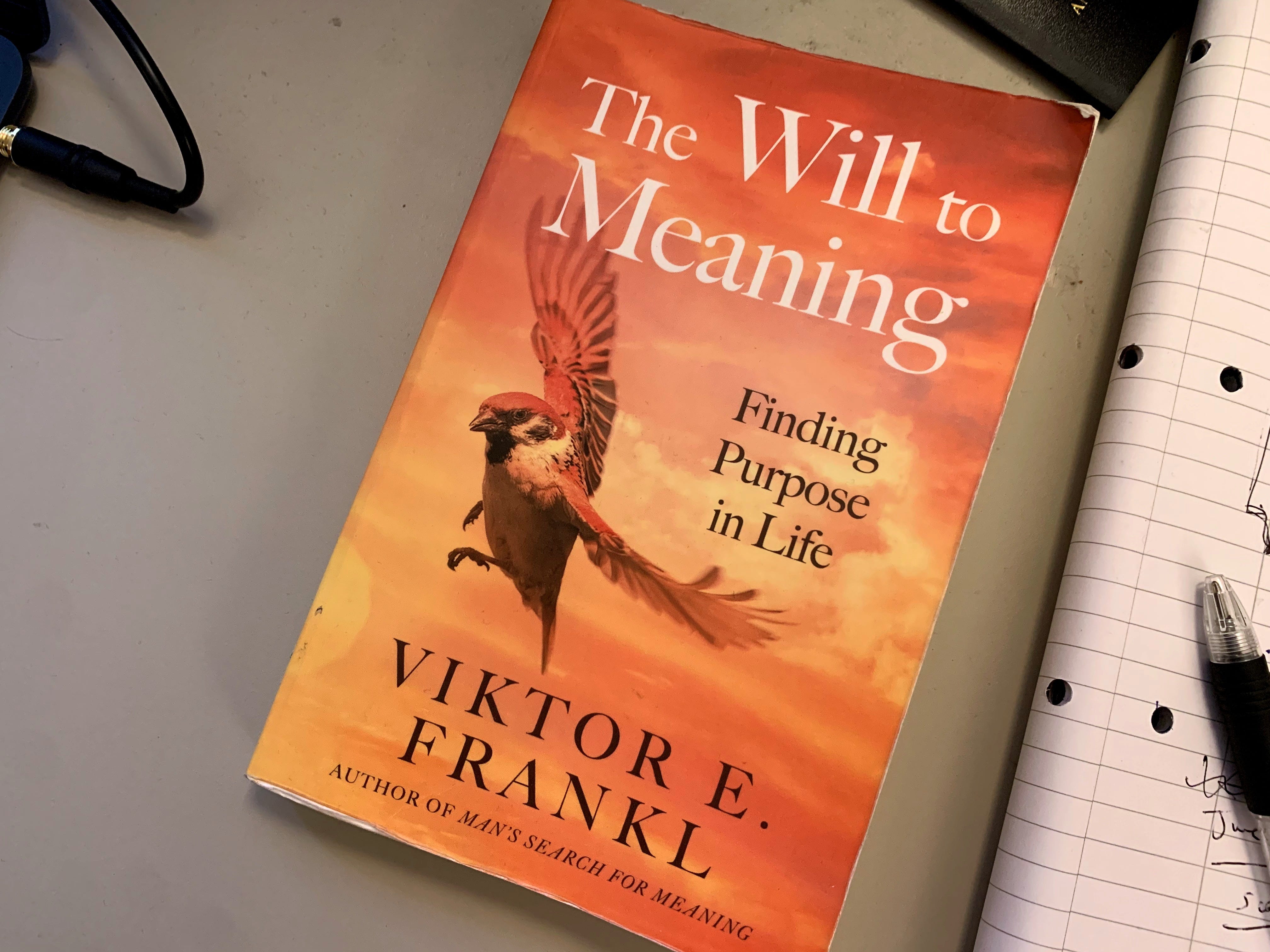
Logos = Meaning + Spirit
So, what is Logotherapy? Frankl does a breakdown of the word here, in particular how he using the word ‘logos’ in this context.
‘In addition to meaning “meaning,” “logos” here means “spirit” - but again without any primarily religious connotation. Here “logos” means the humanness of the human being - plus the meaning of being human!’ p. 5
So, in effect, Logotherapy is a form of psychotherapy focused on helping people to discover the meaning in their life and in their experiences. He sees it is the necessary response to the many patients who are presenting before him with an existential vacuum, people who have not had meanings passed down to them by tradition and do not know where to find it.
In an age such as ours, in which traditions are on the wane, psychiatry must see its principal assignment in equipping man with the ability to find meaning. In an age in which the Ten Commandments seem to many people to have lost their unconditional validity, man must learn to listen to the ten thousand commandments implied in the ten thousand situations of which his life consists. In this respect … logotherapy speaks to the needs of the hour.’ p. xi
As a trainee therapist, the idea that therapy could help people not just to discern their problems, improve their relationships and become more congruent but to uncover meaning in their lives was an exciting thing to read. I wonder if Frankl were alive today, whether he would still see this as the ‘principal assignment’ of psychiatry/therapy. Perhaps he would feel this even more strongly.
Meaning for Self-transcendence
Frankl also has a deep conviction that human beings need to transcend themselves.
‘ ... being human means being in the face of meaning to fulfill and values to realize. It means living in the polar field of tension established between reality and ideals to materialize. Man lives by ideals and values. Human existence is not authentic unless it is lived in terms of self-transcendence.
Man’s original and natural concern with meaning and values is endangered by the prevalent subjectivism and relativism. Both are liable to erode idealism and enthusiasm.’ p. 34
It is because of his conviction that human beings need to live in terms of self-transcendence that Frankl sees a secularising and relativistic Western society as the source of this existential vacuum in his patients.
I have really seen this erosion among my generation. It reminds me of a conversation I once had with friends in the A-Level common room, One of them was convinced that science had already or would eventually explain everything, that religion had no place. I recall trying to explain to him how science explored ‘how’ questions and faith explored ‘why’ questions. He said he saw no point in why questions, he never asked them.
So perhaps where Frankl’s generation of patients once experienced an existential vacuum, Gen Z is a generation that never really bothered to ask why in the first place. Many of them could be unaware that they are even experiencing an existential vacuum.
For Frankl, meaning is how human beings achieve what he calls self-transcendence, how we move beyond our purely selfish desires,
‘Human beings are transcending themselves toward meanings which are something other than themselves, which are more than mere expressions of their selves, more than mere projections of these selves. Meanings are discovered but not invented.’ p. 41
Self-transcendence is why Frankl has no time for the idea that therapy should aim to help people to become ‘Self-actualised’. Many popular theorists (Abraham Maslow among them) see this as the goal of therapy, to help people to realise and fulfil their maximum potential. Here’s Frankl’s take.
‘Self-actualization is not man’s ultimate destination. It is not even his primary intention. Self-actualization, if made an end in itself, contradicts the self-transcendent quality of human existence. Like happiness, self-actualization is an effect, the effect of meaning fulfillment. Only to the extent to which man fulfills a meaning out there in the world, does he fulfill himself. If he sets out to actualize himself rather than fulfil a meaning, self-actualization immediately loses its justification.’ p. 22
Discovering Unique Meanings
So how can people discover meaning if tradition and society no longer hand it to them?
In an age of ‘crumbling and vanishing traditions’, Frankl believed that what he calls unique meanings can be discovered.
‘ … even if all universal values disappeared, life would remain meaningful, since the unique meanings remain untouched by the loss of traditions. To be sure, if man is to find meanings even in an era without values, he has to be equipped with the full capacity of conscience.’ p. 44
When our tutor presented Frnkl and existentialism, she posed a question to us. The question was:
If you died tomorrow, what would you leave unfulfilled? And what would this mean to you?
When she asked us this, two things leapt to my mind: the unfinished work with my clients and an unfinished piece of writing I was working on. I was surprised by both of these things. I did not think about my job or my friends/family (not that those things aren’t important to me) but suddenly two very meaningful parts of my life stood out from among the rest. This kind of exercise unearths unique meanings.
More recently, I’ve used a values exercise with a client. The exercise is that you are faced by a page of twenty or so values (like honesty, friendship, patience) and you write next to each one a score from one to ten, one being the highest. Then you talk them over. I was struck by how different my scores would be from my clients, the things that were most meaningful and valuable to me were not what was most meaningful and valuable to her. But it unearthed for us both what was most important to her, what things made her life meaningful, what her unique meanings were.
Frankl describes the work of a logotherapist this way:
‘His work is based on empirical … analyses, and a phenomenological analysis of the simple man in the street’s experience of the valuing process shows that one can find meaning in life by creating a work or doing a deed or by experiencing goodness, truth, and beauty, by experiencing nature and culture; or, last but not least, by encountering another unique being in the very uniqueness of this human being - in other words, by loving him.’ p. 48
Meaning in Suffering
How can people find meaning even in their sufferings? Here, Frankl believes that it is ultimately about the stance we have towards our sufferings.
‘ … the noblest appreciation of meaning is reserved to those people who, deprived of the opportunity to find meaning in a deed, in a work, or in love, by the very attitude which they choose to this predicament, rise above it and grow beyond themselves. What matters is the stand they take - a stand which allows for transmuting their predicament into achievement, triumph, and heroism.’ p. 49
He fits this idea of the stands we take into his framework of three kinds of values, three main ways that we find meaning in life.
‘If one prefers in this context to speak of values, he may discern three chief groups of values. I have classified them in terms of creative, experiential, and attitudinal values. This sequence reflects the three principal ways in which man can find meaning in life.
The first is what he gives to the world in terms of his creations;
the second is what he takes from the world in terms of encounters and experiences;
and the third is the stand he takes to his predicament in case he must face a fate which he cannot change.
This is why life never ceases to hold a meaning, for even a person who is deprived of both creative and experiential values is still challenged by a meaning to fulfill, that is, by the meaning inherent in the right, in an upright way of suffering.’ p. 49
So a shorthand for looking for meaning in your life would be:
What you give to the world (creativity)
What you take from the world (encounter + experience)
The stand you take (towards suffering)
Becoming Worthy of our Sufferings
It was Frankl’s work on meaning in suffering that first drew me to him as a teenager and now as a trainee therapist, it was this that drew me back to him.
In my rediscovery of him, I came by this line:
‘We must become worthy of our sufferings.’
It’s the kind of line that I can’t fully understand. I wrote it on my whiteboard to sit with it over the months. He borrowed it from Dostoevsky.
‘Dostoevsky said once, “There is only one thing I dread: not to be worthy of my sufferings.” These words frequently came to my mind after I became acquainted with those martyrs whose behavior in camp, whose suffering and death, bore witness to the fact that the last inner freedom cannot be lost. It can be said that they were worthy of their sufferings; the way they bore their suffering was a genuine inner achievement. It is this spiritual freedom - which cannot be taken away - that makes life meaningful and purposeful.’ ‘Man’s Search for Meaning’
Ok, one last Frankl quote and I’ll leave it there.
‘ … even the tragic and negative aspects of life, such as unavoidable suffering, can be turned into a human achievement by the attitude which a man adopts toward his predicament. … Logotherapy is in no way pessimistic; but it is realistic in that it faces the tragic triad of human experience: pain, death, and guilt. Logotherapy must justly be called optimistic, because it shows the patient how to transform despair into triumph.’ p. xi